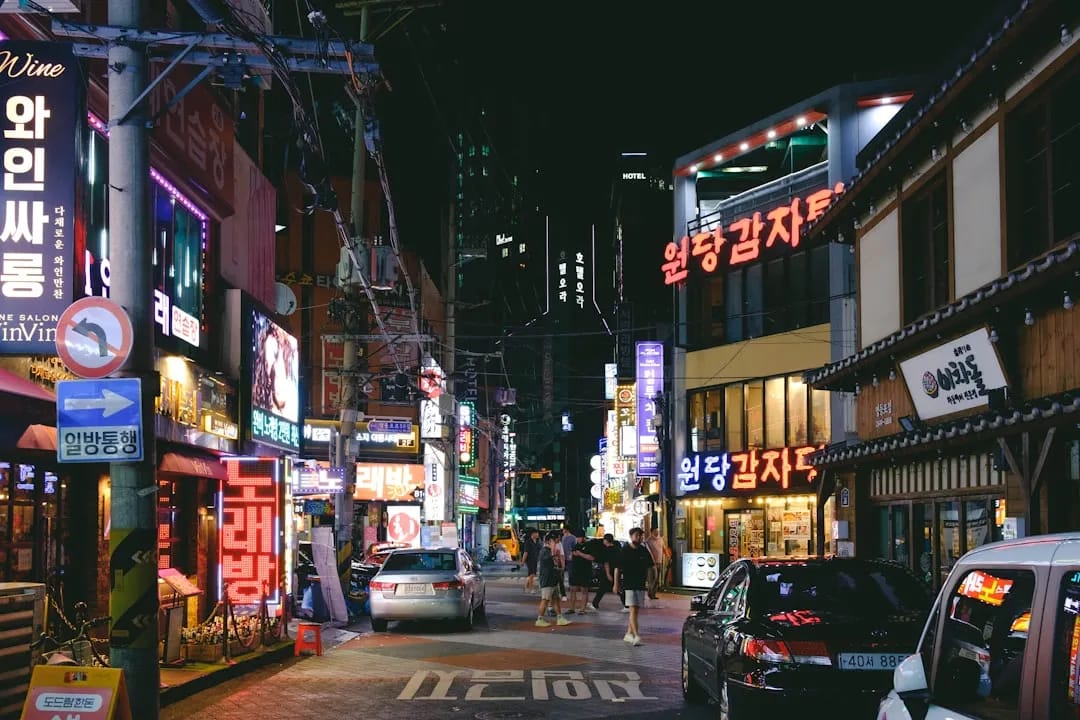
The Foreigner's Guide to Kakao T & k.ride in Korea
Korea's #1 taxi apps, explained for international travelers. Setup, the right ride type for every trip, real fares, airport pickup, and the exact workarounds for foreign cards.
Verified May 202618 min read12 FAQs · 9 routes · 5 ride types
90%
Market share
Korea ride-hailing, Q1 2025
100+
Cities covered
All major Korean cities
k.ride
Foreigner app
34 countries, 133 languages
₩4,800
Base fare
Seoul Regular, first 2km
Pick Your App, Then Read On
Most foreign visitors should start with k.ride. Long-term residents and Korean speakers: Kakao T.
For travelers
k.ride
by Kakao Mobility · launched 2024
- 100% English (also JP, ZH simplified/traditional)
- No Korean phone or bank needed
- Foreign Visa/Mastercard natively supported
- Real-time chat translation in 133 languages
- Same driver pool as Kakao T (90% of Korea)
Inside the App
What you'll actually see. Kakao T official screenshots, same flow as k.ride.
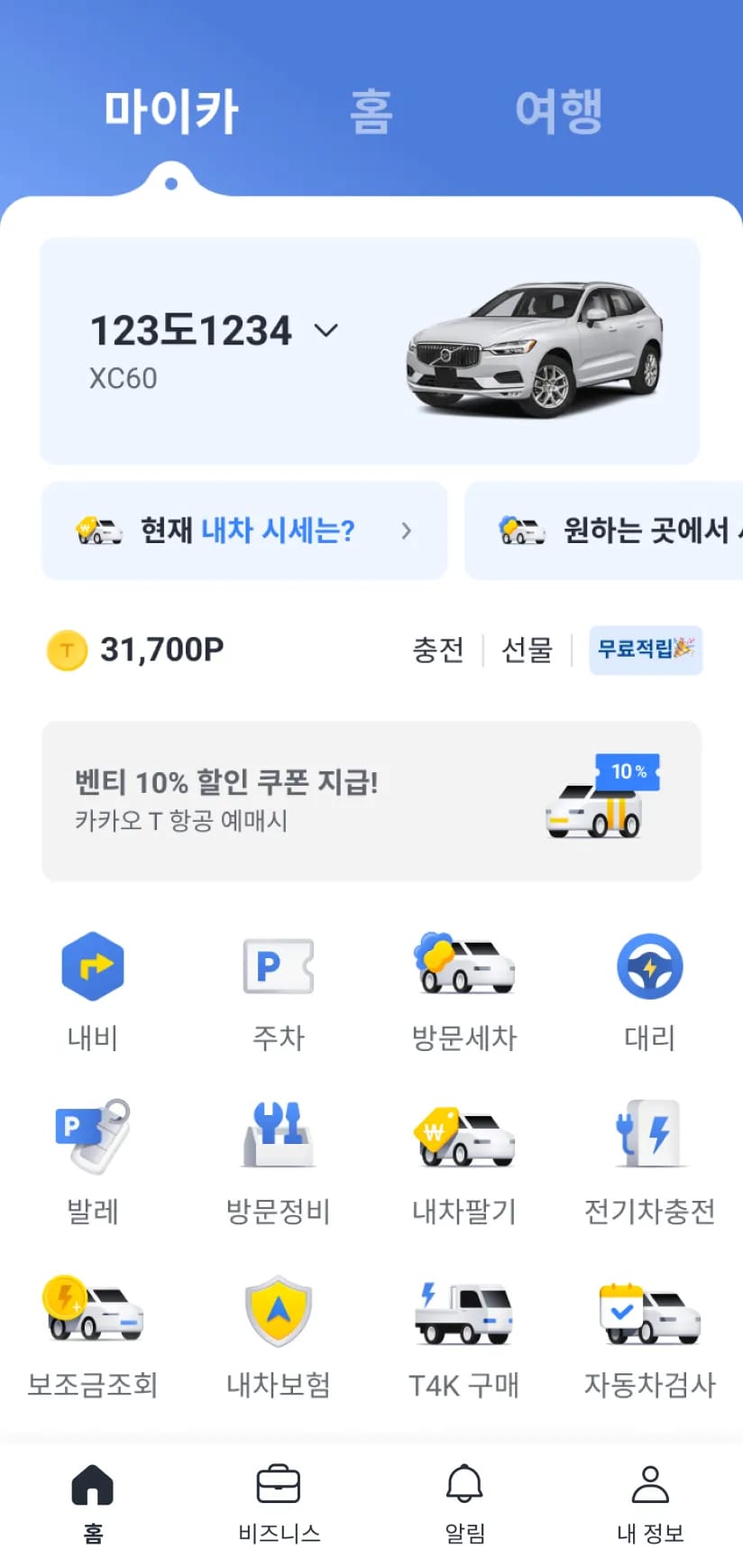
1. Home screen
All Kakao mobility services in one app
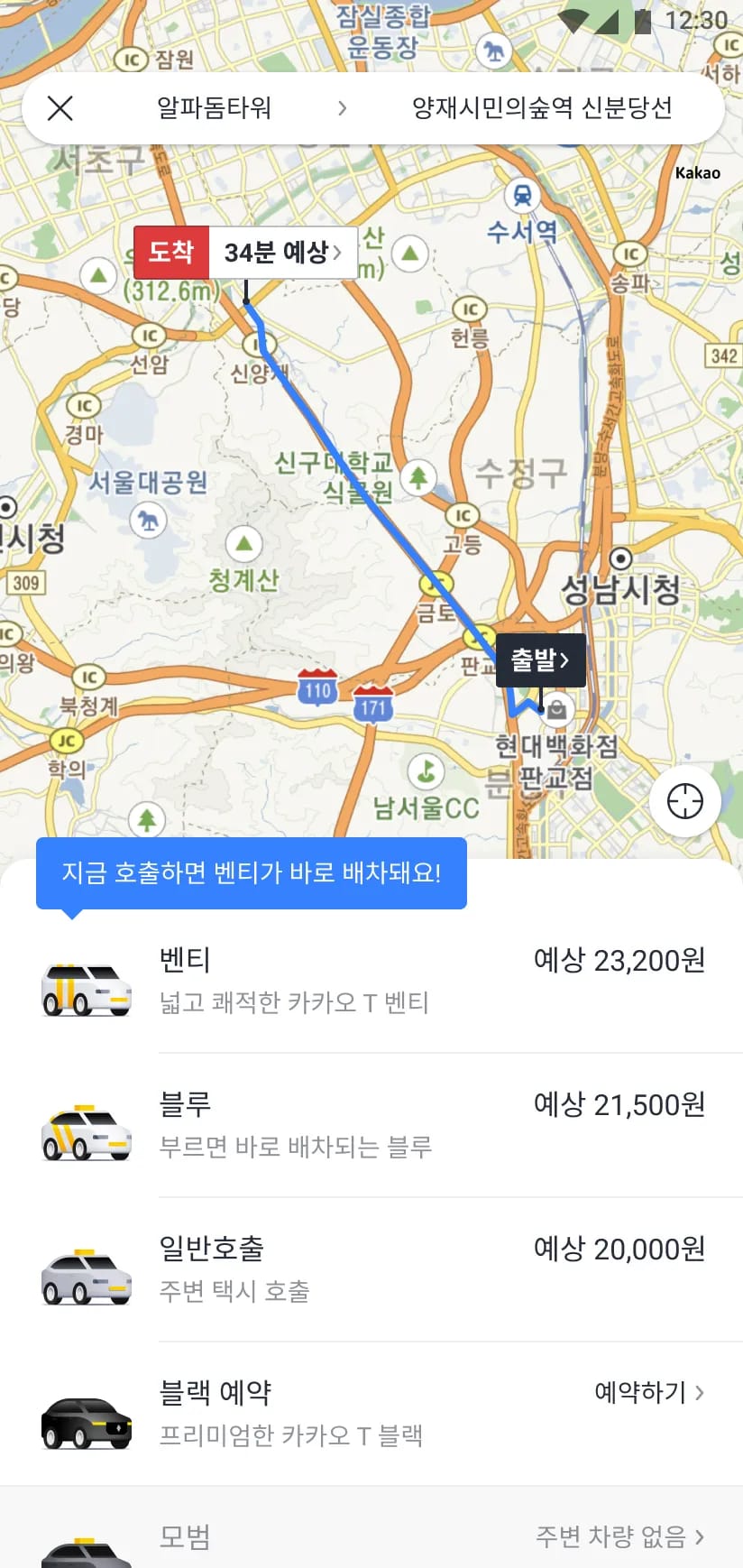
2. Set destination
English search · fare estimate shown upfront
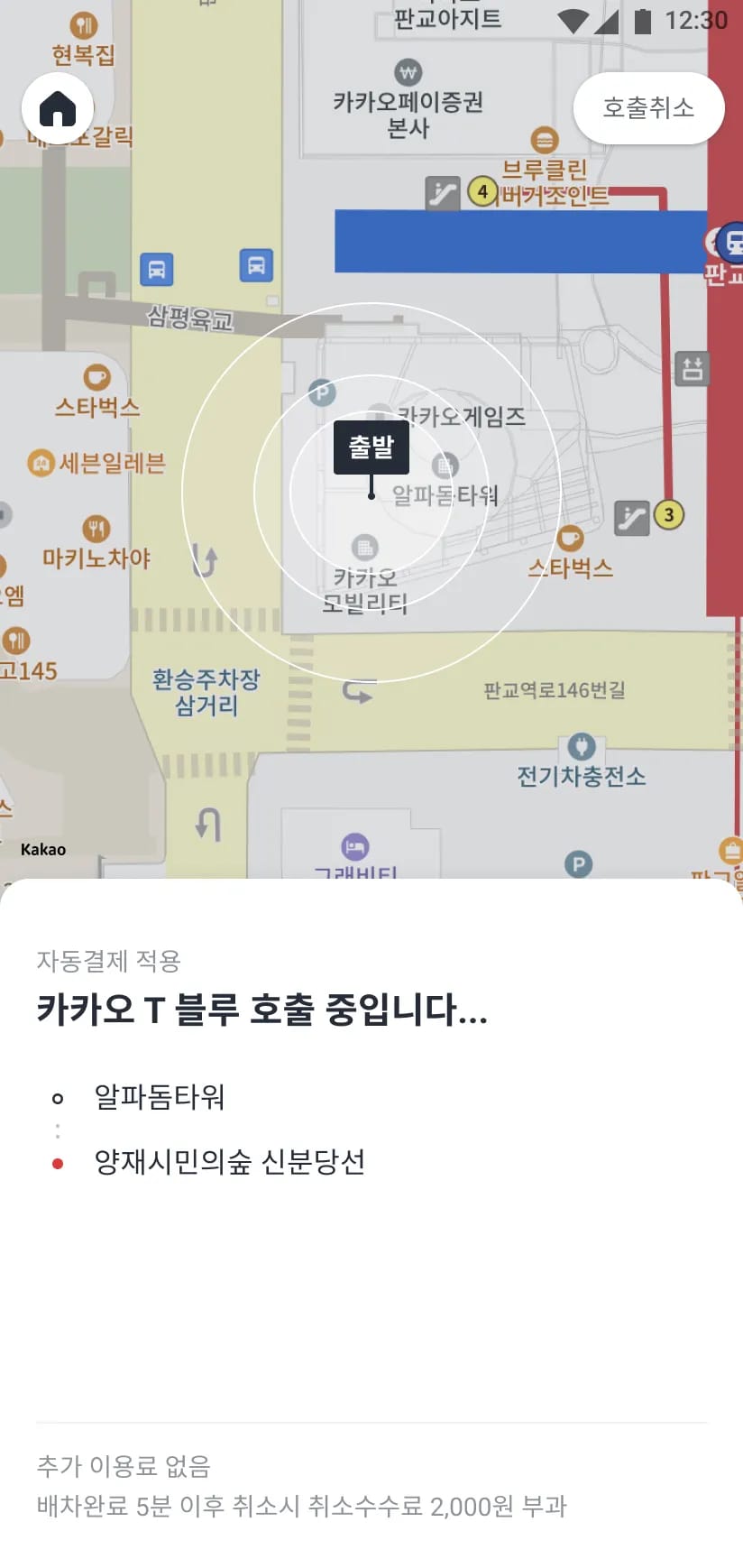
3. Confirm & pay
Choose Auto Pay or Pay to Driver
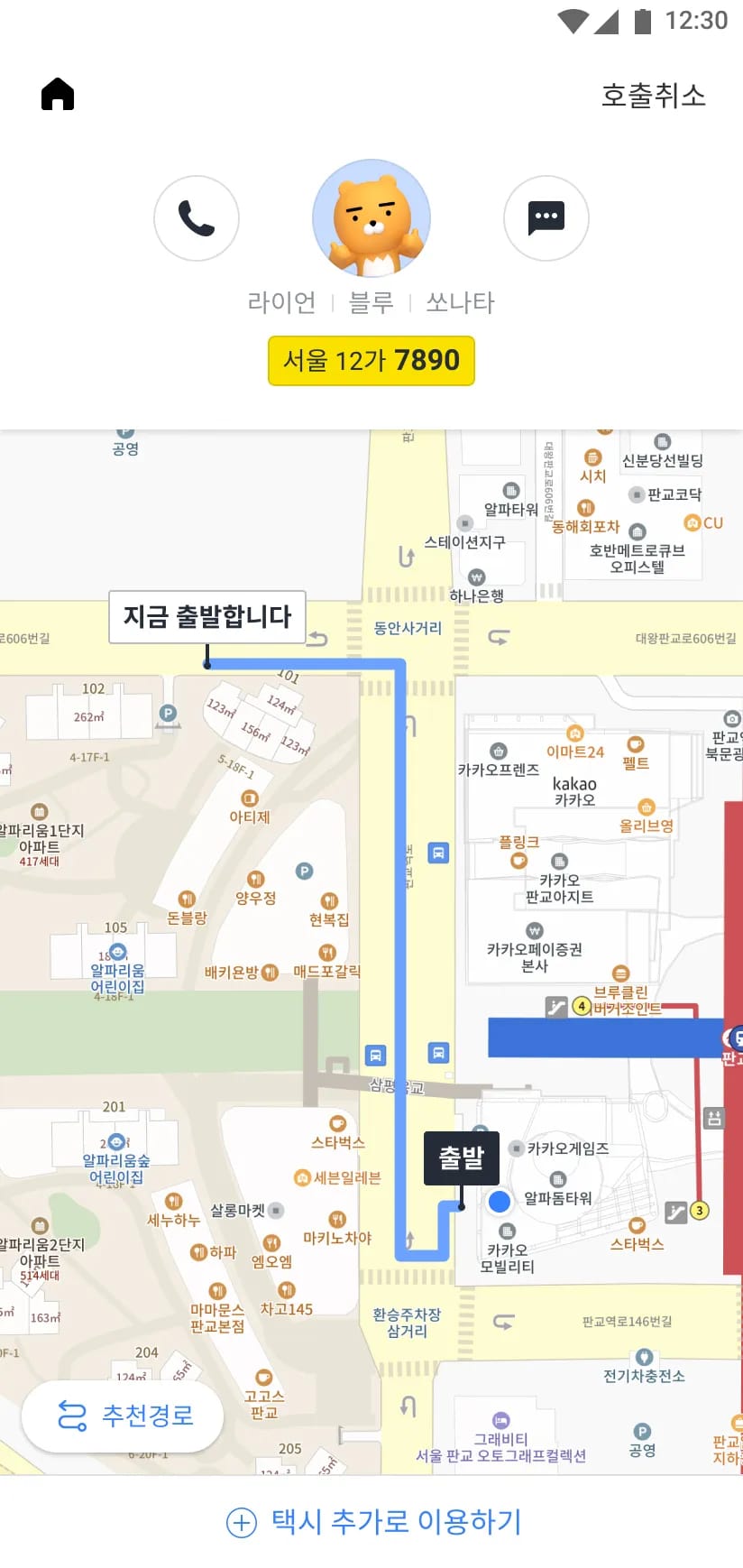
4. Track your ride
Live driver location + plate verification
Source: Kakao Corp (official)
Kakao T vs k.ride
Both are run by Kakao Mobility and share the same driver pool. The difference is what they're optimized for.
Uber Korea operates as Uber Taxi in Seoul/Busan/Incheon (Naver partnership 2024) — viable backup but smaller driver pool than Kakao.
✓Kakao T advantage✓k.ride advantage·No clear winner
| Feature | Kakao T For residents | k.ride For travelers |
|---|---|---|
| Interface language | EN, JP, KR | EN, JP, ZH-simp, ZH-trad |
| Korean phone number | Intl SIM accepted (some identity-tied features may not work) | Not required (Google/Apple login) |
| Foreign credit card | May fail at card-link step | Credit/debit + mobile pay supported |
| Pay to driver (cash/card on arrival) | ✓ | Not specified by k.ride — pre-pay assumed |
| Available cities | All Korea (100+) | All Korea + 33 other countries |
| Driver pool | ~90% of Korea taxi market (Korea Herald 2025-10) | Same pool (Kakao Mobility partnership) |
| Fare estimate before booking | ✓ | ✓ |
| Real-time translated chat | Basic | 133 languages auto-translate |
| Airport pre-booking | ✓ | ✓ |
| Best for | Long-term residents, KR speakers | Travelers, first-time visitors |
Pick the Right Ride Type
Five ride types, but only three are physically different cars. Regular and Blue use the same vehicle pool — Blue is a franchise *system* (no-cancel guarantee), not a different car. Black, Venti, and Deluxe are genuinely different vehicles. All specs verified from Kakao Mobility's official policy page.
Regular Taxi
일반택시
₩4,800base
+₩100 per 131m or 30s
Vehicle
Mid-size sedans (model varies by operator) · Seoul livery: orange, silver, or white
Operator
Individual or corporate-owned taxi (not Kakao franchise)
Best for
Short trips, daytime, when you're flexible on driver acceptance
- Cheapest standard option
- Drivers can decline rides (rush hour, short trips)
- Hailable on street or via Kakao T app
Kakao T Blue
카카오 T 블루
₩4,800 (identical to Regular)base
Same meter as Regular — no premium for the service tier
Vehicle
Same vehicle pool as Regular — branded Kakao livery added
Operator
Franchise taxi (가맹택시) — Korea's #1 licensed franchise, launched 2019
Best for
When you've been cancelled or want guaranteed service quality
- Drivers cannot refuse rides (franchise contract)
- Auto-dispatch — no destination filtering
- Trained drivers, uniform service standard
- App-call only (no street hailing)
Kakao T Black
카카오 T 블랙
₩6,000base
+₩100 per 71.4m or 15s — meter ticks up roughly 2× faster than Regular
Vehicle
2,800cc+ premium vehicles (Mercedes E-class + BMW at 2015 launch). Current fleet varies by operator — premium-class license required.
Operator
Separate premium-taxi license (고급택시) — not standard taxi pool
Best for
Airport pickup, business meetings, VIP transfers
- 2,800cc+ premium sedans/SUVs
- Black exterior, no taxi roof sign
- Pre-booking available (hours/days ahead)
- App-call only
Kakao T Venti
카카오 T 벤티
₩4,000base
+₩100 per 131m or 40s · Dynamic surge 0.8× to 2.0×
Vehicle
Kia Carnival / Hyundai Staria — 11-seater minivans (taxi-configured)
Operator
Large-vehicle taxi license · Seoul only · Auto-pay required (no Pay-to-Driver)
Best for
Groups of 5–9, luggage-heavy airport transfers
- 11-seater minivans (taxi-configured)
- Strollers, oversized luggage OK
- Off-peak often cheaper than 2 Regular taxis
- Surge can hit 2× during peak hours
Deluxe Taxi
모범택시
₩7,000base
First 3km included in base · +20% night surcharge only (no 40% spike between 23–02h)
Vehicle
Mid-large premium sedans · Black body with yellow roof sign + yellow side stripe (instantly recognizable)
Operator
Government-licensed premium taxi (not Kakao-specific) · Hailable + app-call
Best for
Long late-night rides — beats Regular after midnight thanks to no 40% surge
- Distinctly recognizable (black + yellow)
- 3km base distance (vs 2km for Regular)
- No 23:00–02:00 peak surcharge — Deluxe stays at +20%
- Independent of Kakao Mobility franchise system
Sources: Kakao Mobility official policy · Seoul Metropolitan Govt
Seoul Taxi Fares (2026)
Verified against Seoul Metropolitan Government rates.
| Regular taxi base fare (first 1.6 km) | ₩4,800(~$3.50 USD) |
| Distance rate (after base) | ₩100 per 131 m |
| Time rate (when stopped/slow) | ₩100 per 30 sec |
| Late night 22:00–23:00 / 02:00–04:00 | +20% |
| Late night PEAK 23:00–02:00 | +40% |
| Deluxe taxi (모범) base fare (first 3 km) | ₩7,000 |
| Deluxe distance / time rate | ₩200/151m · ₩200/36s |
| Deluxe night surcharge (22:00–04:00 flat) | +20% only |
| Outside-city surcharge | +20%(Waived for ICN→Seoul (joint zone)) |
| Incheon Bridge toll (passenger pays) | ₩2,000(Reduced from ₩5,500 in late 2025) |
Late-night hack
Between 23:00–02:00, Deluxe taxis (모범) lock in +20% while Regular jumps to +40%. For long rides after midnight, Deluxe often ends up cheaper than Regular — counter-intuitive but verified.
5-Step Setup (Before You Land)
Do this on the plane Wi-Fi or at the gate. Saves 20 min at arrivals.
- 1
Download & Install
Get k.ride from the App Store / Google Play before your flight (or while on airport Wi-Fi if you forgot). If you prefer Kakao T, install it now — the sign-up flow accepts your international SIM.
- 2
Sign Up with Email or Google/Apple
k.ride: log in with Google or Apple account, no phone verification needed. Kakao T: enter your international phone number with country code (+1, +44, etc.) for SMS verification.
- 3
Add a Payment Method (or Skip)
k.ride: register your foreign Visa/Mastercard — works natively. Kakao T: try registering, and if rejected, switch to "Pay to Driver" (현장결제) — works just as well.
- 4
Set Your First Destination
Type "Incheon Airport" or your hotel name in English. Pick from the suggestion list (don't free-type) — this ensures the driver sees the correct Korean address.
- 5
Call & Verify Plate
Tap "Call Taxi." When the car arrives, confirm the plate number matches the app before getting in. Open the door yourself — Korean taxis are manual.
How Much Will It Cost?
9 of the routes foreign travelers ask about most — with **realistic taxi fare ranges**, the best ride type, and the cheaper-subway alternative. All fares verified against Seoul Metropolitan Government rates (May 2026).
Airport Transfers
Where most foreign travelers' first taxi ride happens.
~55 km · 60–90 min
Incheon Airport (ICN)
Gangnam (강남)
₩75,000–90,000
Best: Kakao T Black or Venti
💡 Most-asked route. Includes Incheon Bridge toll ₩2,000. AREX Express (₩13,000, 43 min to Seoul Station, then subway) dramatically cheaper if luggage allows.
~58–60 km · 65–100 min
Incheon Airport (ICN)
Hongdae / Myeongdong
₩75,000–95,000
Best: Kakao T Black or Venti
💡 Both areas roughly the same. AREX Express ₩13,000 to Seoul Station + 1 subway transfer ≈ 75 min. Pre-book taxi if arriving past midnight.
~20–25 km · 30–55 min
Gimpo Airport (GMP)
Central Seoul (강남/명동/홍대)
₩25,000–42,000
Best: Regular or Blue
💡 Domestic flights + Japan/China shuttle hub. Subway Line 9 (to 강남) and Line 5 (to 명동) are ~₩1,500 and 45–50 min.
Inside Seoul
Subway is usually cheaper. Taxi saves time after midnight and for groups with luggage.
~15 km · 25–45 min
Seoul Station (서울역)
KSPO DOME (Olympic Park)
₩15,000–22,000
Best: Regular or Blue
💡 Concert-night staple. Subway Line 9 to Olympic Park (~₩1,500) avoids traffic if you leave early.
~7 km · 15–30 min
Hongdae (홍대)
Myeongdong (명동)
₩8,000–12,000
Best: Regular
💡 Cross-Han classic. Subway Line 2 → 4 (~₩1,500, 25 min) is often faster in evening traffic.
~9 km · 20–40 min
Gangnam (강남)
Itaewon (이태원)
₩10,000–15,000
Best: Regular or Blue
💡 Bar-hop route. Friday/Saturday night taxi can take 40 min — subway Line 6 ~ ₩1,500, 25 min.
Busan & Jeju
Outside Seoul. Jeju has no subway — taxi or rental car is the default.
~13 km · 25–40 min
Busan Station (부산역)
Haeundae Beach (해운대)
₩13,000–18,000
Best: Regular or Blue
💡 Busan subway Line 1 → 2 (~₩1,500, 50 min) but taxi much faster for beach evenings.
~28 km · 40–60 min
Gimhae Airport (PUS)
Haeundae Beach (해운대)
₩28,000–38,000
Best: Kakao T Black or Venti
💡 Bus 1003 direct to Haeundae is ₩2,400 (~75 min). Taxi essential for late-night arrivals.
~38 km · 45–60 min
Jeju Airport (CJU)
Jungmun Resort (중문)
₩45,000–60,000
Best: Kakao T Black or Venti
💡 No subway on Jeju. Airport limousine bus 600 (₩5,500, 75 min) is the budget alternative. Rental car ~₩50k/day for 2+ days.
Fare ranges reflect off-peak → peak-hour variance + toll fees where applicable. Actual fares may vary with traffic and surge pricing. Always check the in-app fare estimate before confirming.
When Things Go Wrong
The three problems foreign travelers hit most. Solve them in 30 seconds.
🗣️
You don't speak any Korean
Driver only speaks Korean. You need to clarify a detour, change destination, or explain something.
Solution
- →Use the in-app chat — Kakao T has basic translation, k.ride has 133-language real-time chat
- →Show the driver your destination on the app screen (Korean text auto-filled when you pick from search)
- →Save "카드로 결제할게요" (Pay by card, please) and "여기서 내릴게요" (Drop me here) as notes
- →Emergency: dial 1330 (24h Korea Tourism Hotline, 8 languages incl. English) and hand the phone to the driver
💳
Your foreign card is rejected at sign-up
Kakao T often refuses to link Visa/Mastercard issued outside Korea. You get stuck on the payment registration screen.
Solution
- →Switch to "Pay to Driver" (현장결제) — no card link needed, pay at the end
- →Or download k.ride instead — native foreign card support, no Kakao account required
- →Cash works in any Korean taxi (drivers carry change up to ₩50,000)
- →T-money card (₩4,000 at any convenience store) works in nearly all taxis as backup
🚫
Drivers keep canceling your ride
Common during rush hour (08-09h, 18-20h) or rainy nights. Regular taxi drivers can decline. Especially short trips or unpopular destinations get filtered.
Solution
- →Switch to Kakao T Blue — no-rejection fleet guarantees a pickup
- →Add a tip in the app (Kakao T allows pre-tip, ₩1,000–3,000 dramatically reduces cancellations)
- →Re-book with a slightly different pickup spot 50m away — driver radius re-calculates
- →Try k.ride — its driver pool overlaps but uses different routing logic
- →Worst case: walk to a major street and flag down an empty taxi (red "빈차" light)
Emergency Hotlines (English)
1330
Korea Tourism Hotline · 24h · 8 languages (EN/JP/ZH/RU/VI/TH/MS/ID) · KTO operated · Live chat available
120
Seoul Dasan Call Center · 9:00–22:00, 365 days · 5 languages (EN/ZH/JP/MN/VI) · Press 9 → 1 for English · Reports taxi complaints, refunds, city services
112 / 119
Police / Ambulance · 24h · All Korea · English available
In-app report
Kakao T / k.ride apps have a built-in driver report button — fastest path for app-booked rides
Frequently Asked Questions
The 12 questions foreign travelers ask us most. Click to expand.
Do I need a Korean phone number to use Kakao T?+
You can sign up with an international phone number at the SMS verification step — select your country code (+1 for US, +44 UK, etc.). Caveat: some identity-tied features may not fully work with short-term tourist SIM cards that aren't registered under a verified personal identity in Korea, since Kakao runs an identity check against the carrier. Basic booking and Pay-to-Driver work fine in practice. If your foreign carrier blocks Korean SMS, switch to k.ride.
Does Kakao T accept foreign credit cards?+
Sometimes. Visa and Mastercard issued outside Korea often fail at the card-registration screen. The workaround is the "Pay to Driver" (현장결제) option — you book the ride without registering a card and pay cash, card, or T-money on arrival. Or use k.ride, which has native foreign card support.
Is Kakao T or k.ride better for first-time visitors?+
k.ride is better for first-timers. It was built specifically for foreigners — 100% English interface, no Korean phone or bank needed, accepts global cards. Behind the scenes it uses the same Kakao Mobility driver pool, so you get the same cars and coverage. Kakao T is better if you're staying long-term or already have a Korean account.
Are taxis cheaper than the subway in Seoul?+
No. Subway is ~₩1,500 per ride; a taxi from Hongdae to Myeongdong is ~₩10,000. Taxis make sense for late nights (subway closes ~24:00), groups of 3+, luggage transfers, and direct routes that would require multiple subway transfers.
How much is a taxi from Incheon Airport to central Seoul?+
₩75,000–95,000 depending on destination and traffic — Gangnam ~₩75–90k, Myeongdong/Hongdae ~₩75–95k. Incheon Bridge toll ₩2,000 is added (reduced from ₩5,500 in late 2025). The outside-city +20% surcharge is waived because Incheon Airport is a joint Seoul–Incheon zone. AREX Express train is ₩13,000 and 43 min direct to Seoul Station if your luggage allows.
Is there a tip expected?+
No. Korean taxi culture has no tipping. The metered fare or app-quoted fare is exactly what you pay. The only exception is Kakao T's optional in-app tip during booking, which helps reduce cancellations in peak hours — it's a strategic tool, not a courtesy.
What's the late-night surcharge?+
Regular taxis: +20% from 22:00–23:00 and 02:00–04:00, +40% from 23:00–02:00 (the peak surcharge window). Deluxe taxis (모범) have only +20% throughout — no 40% spike. For long late-night rides after midnight, Deluxe often ends up cheaper than Regular.
Can I open the taxi door myself?+
Yes — Korean taxi doors are manual (unlike Japan where they auto-open). Pull the handle yourself, both getting in and out. Drivers don't get out to open doors.
What if the driver refuses to take me?+
Driver refusal (승차거부) is illegal in Korea. Note the plate number and license plate, then call 120 (Seoul Dasan Call Center, 9:00–22:00, press 9 → 1 for English). For app-booked rides, use the in-app report function — Kakao Mobility and k.ride actively penalize drivers. Most drivers won't risk it once they've accepted in the app.
Does Kakao T work in Busan, Jeju, and other cities?+
Yes. Kakao T covers 100+ Korean cities including Busan, Daegu, Daejeon, Gwangju, Jeju, Gyeongju, and most regional towns. Pricing differs slightly by city (Busan base ₩4,800, Jeju ₩4,800, smaller cities ₩4,000), but the app experience is identical.
Is Uber available in Korea?+
Yes. Uber returned to Korea after its 2015 ban under a regulatory-compliant model — it now operates as Uber Taxi, connecting riders to licensed local taxis (not private cars). Active in Seoul, Busan, and Incheon as of 2026. Uber partnered with Naver in 2024 to challenge Kakao's ~90% market share. Pricing is competitive but Uber's driver pool is still much smaller than Kakao's — workable as a backup, especially when Kakao surge is bad.
Can I book a taxi in advance for the airport?+
Yes. Both Kakao T and k.ride support pre-booking (예약). Open the app, choose airport as destination, then tap "Reserve" instead of "Call Now." You can book hours or days ahead. For peak times (Friday evenings, holiday eves), pre-booking is strongly recommended.
Related Guides
Taking a Taxi in Korea (Beyond Apps)
Street hailing, taxi colors, etiquette, and what to do if you don't have data.
How to Buy K-pop Concert Tickets
Melon Ticket, Interpark, and YES24 — the foreigner-friendly path.
Seoul Subway Map
When the taxi is too expensive — Seoul's subway is one of the world's best.
All Travel Guides
Browse our full library of foreigner-tested Korea travel guides.