All Guides
Nakhwanori: Korea's Traditional Fire-Flower Ceremony
Cascading sparks reflected in water, performers on rafts in white robes. Nakhwanori is Korea's 500-year-old fire ceremony you can still see in person every May in Haman.
nakhwanorinakhwa norikorean fire ceremonykorean traditional fireworkshaman nakhwa festival
Falling Flowers Made of Fire
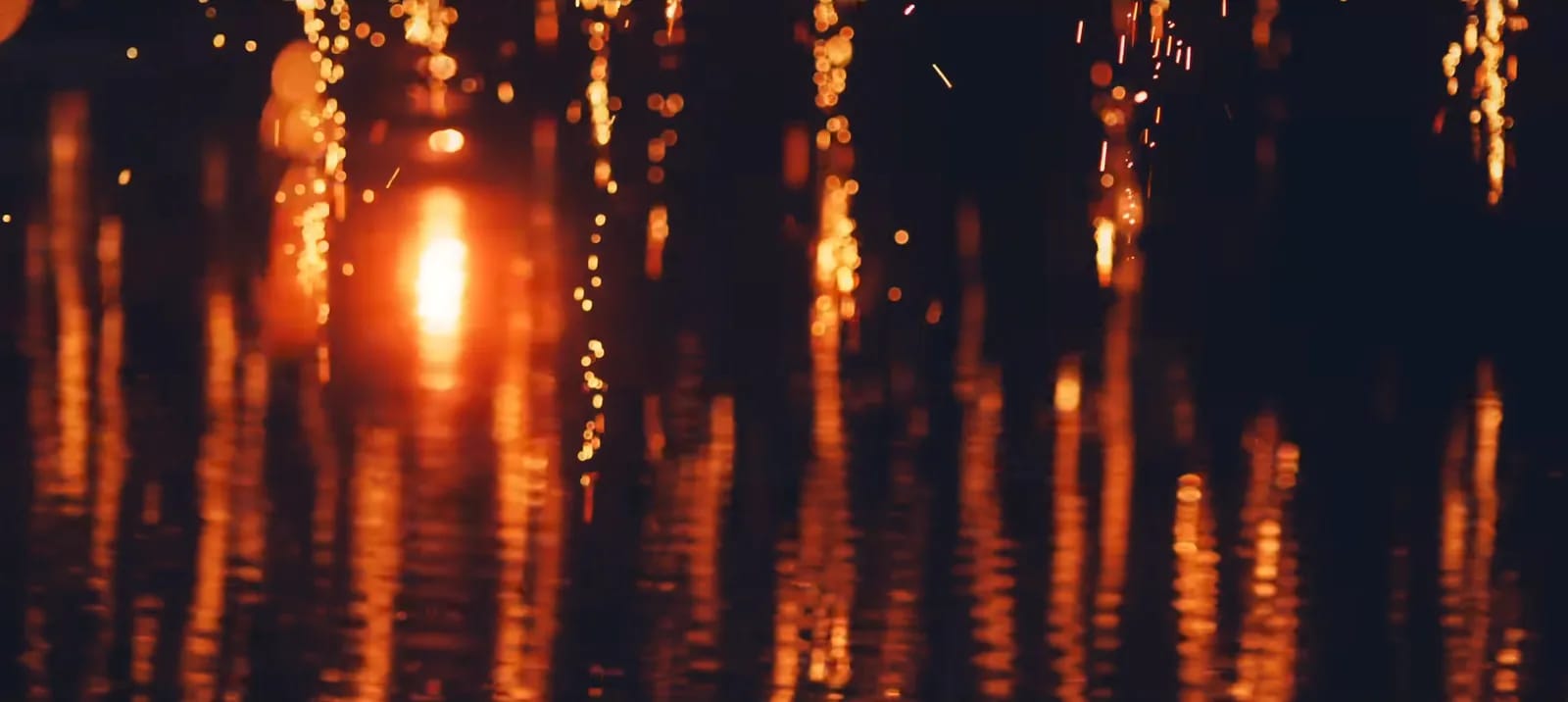
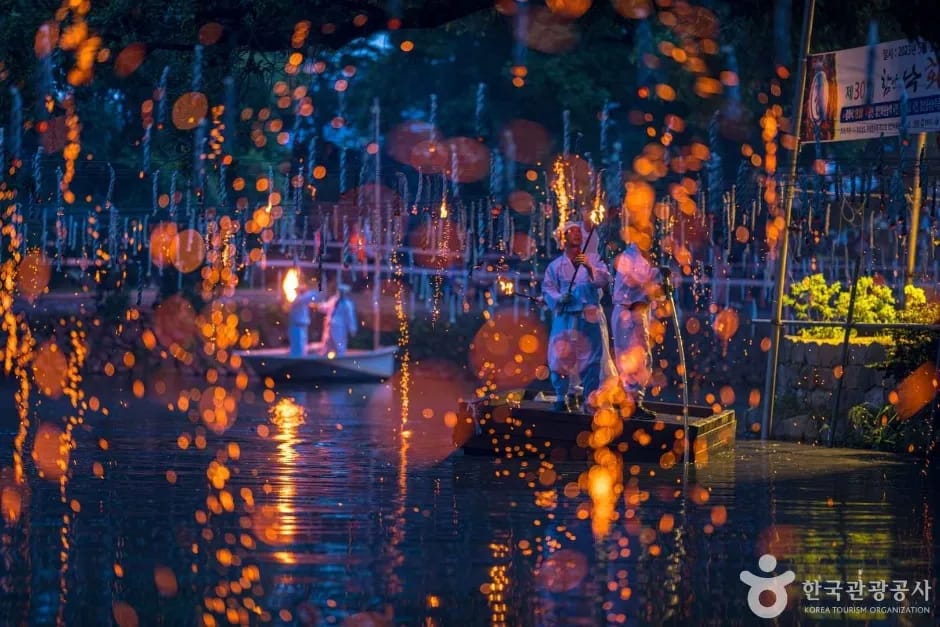
Nakhwanori (낙화놀이) literally means "falling flower play." Hundreds of small charcoal pouches are strung on ropes above a pond and lit simultaneously. As the pouches burn, sparks scatter downward in slow cascades that look like flower petals drifting through the air. The reflection doubles the effect on the water surface below, creating a tunnel of falling fire.
The tradition dates to the 16th century during King Seonjo's reign of the Joseon Dynasty. Jeong Gu, a Confucian scholar serving as Haman County magistrate, started the ceremony as a prayer for community well-being and good harvests during a time of political instability and widespread poverty. Over 500 years later, the ceremony is still performed at the same location where it began.
Nakhwanori recently appeared in two major productions: BTS RM's "Wild Flower" music video (2022, 100M+ views) and the drama Perfect Crown (21세기 대군부인, 2026). RM traveled to the actual location to film the nakhwanori scenes, refusing to use CGI.
The Ceremony in Images
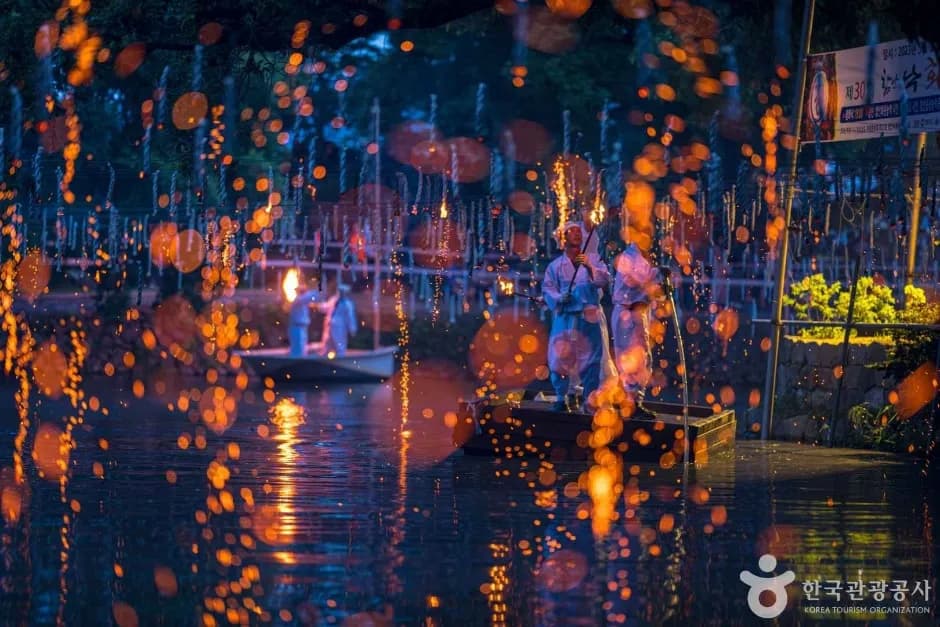
Nakhwabong charcoal pouches burning simultaneously, creating cascading sparks reflected in the pond
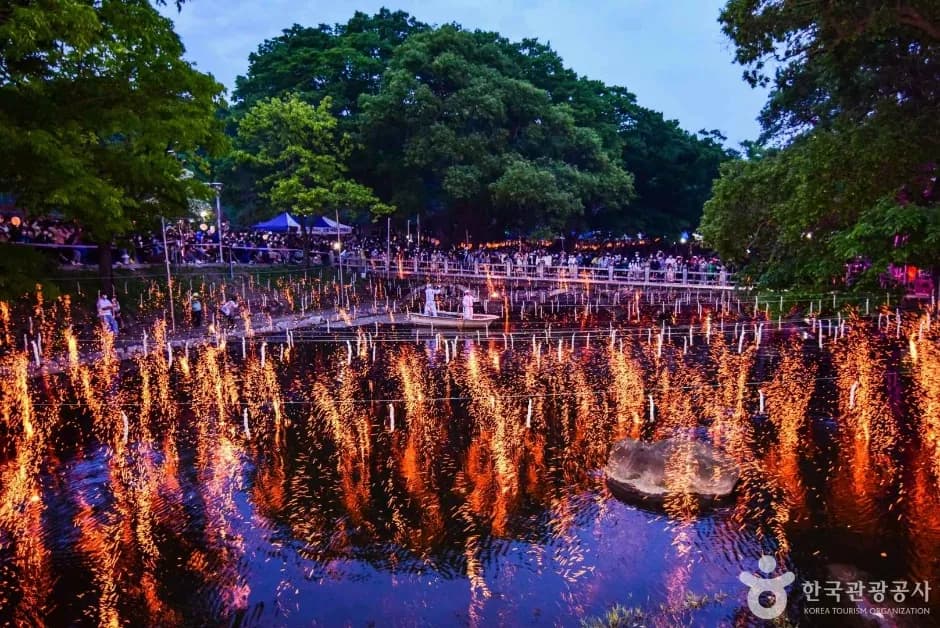
The full ceremony: hundreds of nakhwabong rods suspended on lines across the pond, lit at once
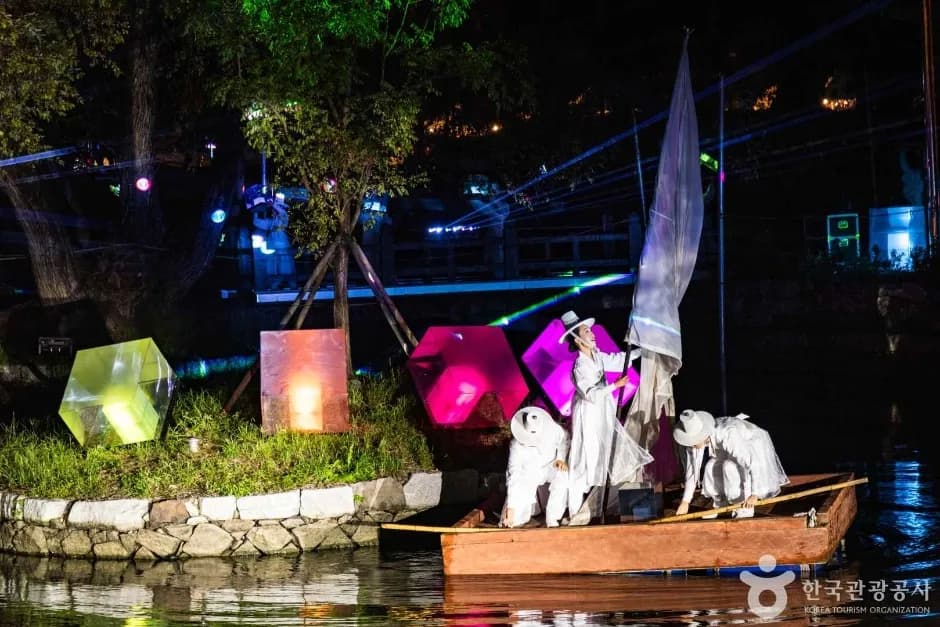
Members of the Haman Nakhwanori Preservation Society ride rafts to light the nakhwabong
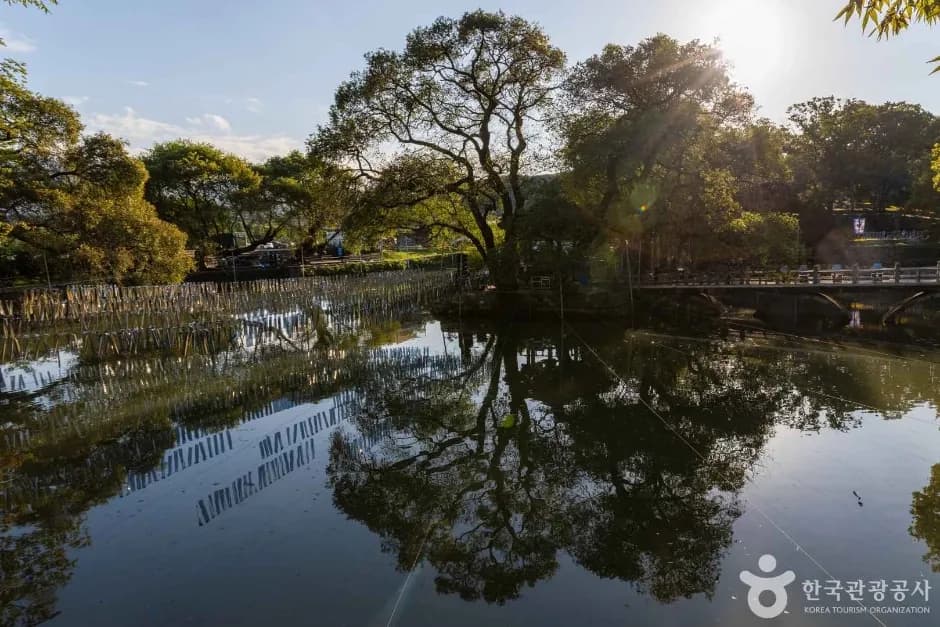
Mujinjeong by day: the rods are strung and waiting. The same scene transforms completely after dark
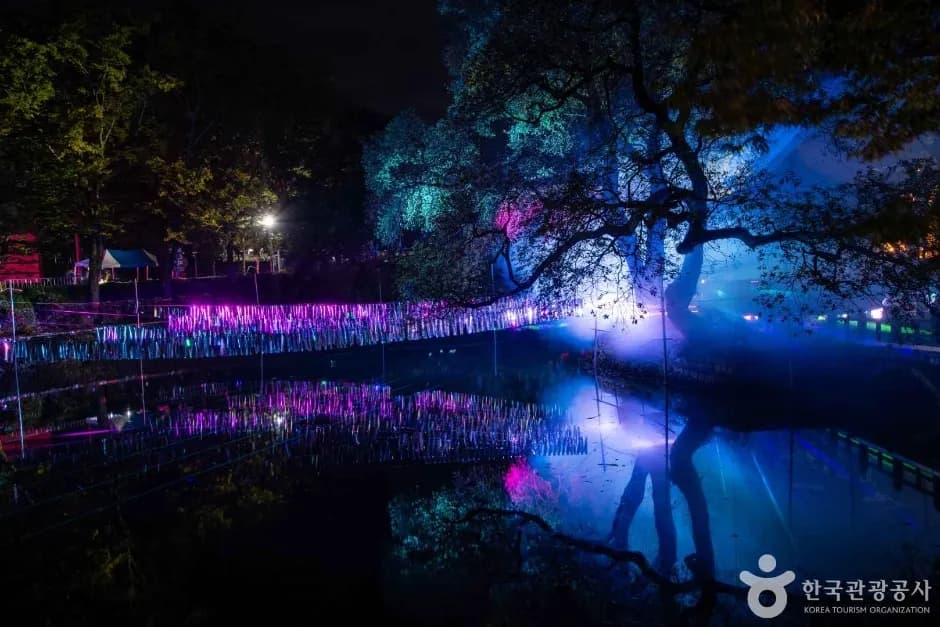
Modern lighting elements are added before and after the traditional fire ceremony
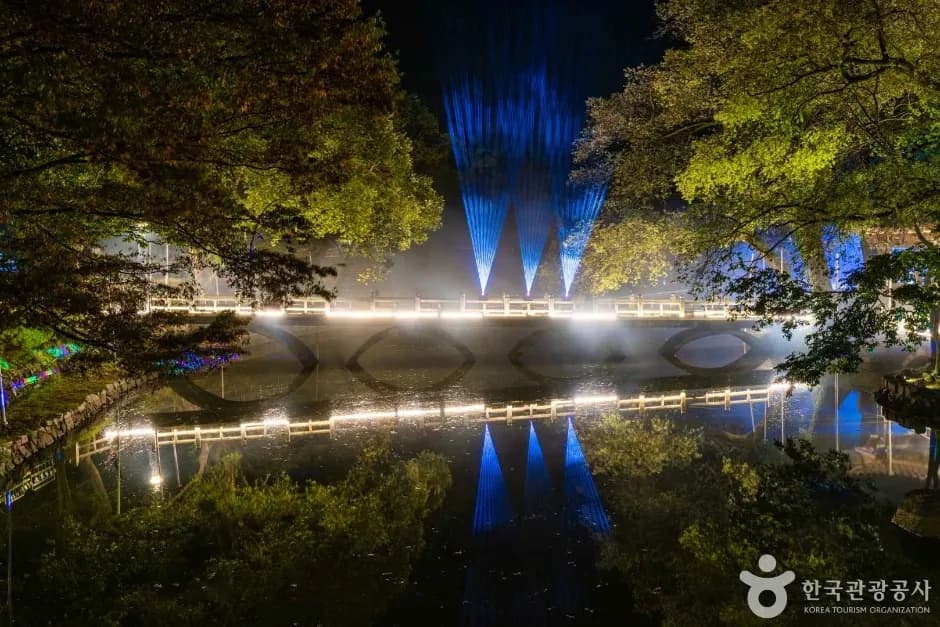
The bridge over the pond with laser projections and mist, part of the expanded festival program
Source: Korea Tourism Organization
RM — Wild Flower (feat. Youjeen)
How Nakhwanori Works
1
Making the nakhwabong
Oak charcoal is ground into powder, mixed with salt, and packed into small pouches made of hanji (traditional Korean paper). The pouches are wrapped around cotton wicks and twisted shut. Each pouch burns for about 2-3 minutes.
2
Stringing the rods
The nakhwabong pouches are tied to long ropes or bamboo sticks and suspended on iron wires stretched across the pond. Hundreds of them hang in rows, spaced evenly above the water surface.
3
Lighting the fire
At dusk, performers from the Haman Nakhwanori Preservation Society dress in white jeogori jackets and ride bamboo rafts onto the pond. They light the nakhwabong one row at a time using torches.
4
The falling flowers
As the pouches burn, sparks scatter downward in slow arcs. The reflection on the still pond water doubles every spark. Traditional Korean music plays throughout. The entire ceremony lasts about two hours.
Haman Nakhwanori Festival 2026
Date
May 24, 2026 (Saturday). Festival runs 1 PM - 10 PM. Fire lighting at 7 PM.
Location
Mujinjeong Pavilion, Haman-myeon, Haman-gun, Gyeongsangnam-do
Capacity
5,800 total (4,000 online via Yes24, 1,800 on-site)
Tickets
Free, but advance reservation required. Opens on Yes24 and sells out in under one minute.
From Seoul
KTX to Dongdaegu (1h 40m), then ITX to Haman Station. Or KTX to Jinju, then Mugunghwa to Haman.
From Busan
Bus from Sasang Bus Terminal to Haman (1h). Or train to Changwon, then local bus.
Other Nakhwanori Sites
Muju Anseong (Jeollabuk-do) and Sejong City also hold nakhwanori festivals, though Haman's is the oldest and largest.
Designation
South Gyeongsang Province Intangible Cultural Heritage
Planning Tips
The festival sells out in seconds. Set an alarm for the Yes24 reservation opening date (usually announced in March). If you miss it, a limited number of on-site spots are available on the day, but arrive early. The fire ceremony starts at 7 PM, but the full festival runs from 1 PM with traditional performances and food stalls. Bring a tripod for photography. The area around the pond gets crowded, so securing a spot along the water's edge early is key for the best view and reflections.
Plan Your Visit
Seoul monthly averages to help you pack right
Jan-1°-8°18mm
Feb2°-6°25mm
Mar9°0°40mm
Apr17°6°65mm
May23°12°90mm
Jun27°18°130mm
Jul29°22°370mm
Aug30°22°290mm
Sep26°16°140mm
Oct19°8°45mm
Nov10°1°50mm
Dec2°-5°20mm