All Guides
Korean BBQ: The Complete Guide to Grilling Like a Local
Everything you need to know about Korean BBQ — from samgyeopsal and hanwoo beef to table-side grilling, scissors etiquette, and the perfect post-BBQ meal.
Korean BBQsamgyeopsalKorean barbecue guidehanwoo beefKorean BBQ etiquette
Why Korean BBQ Is a Must-Try Experience
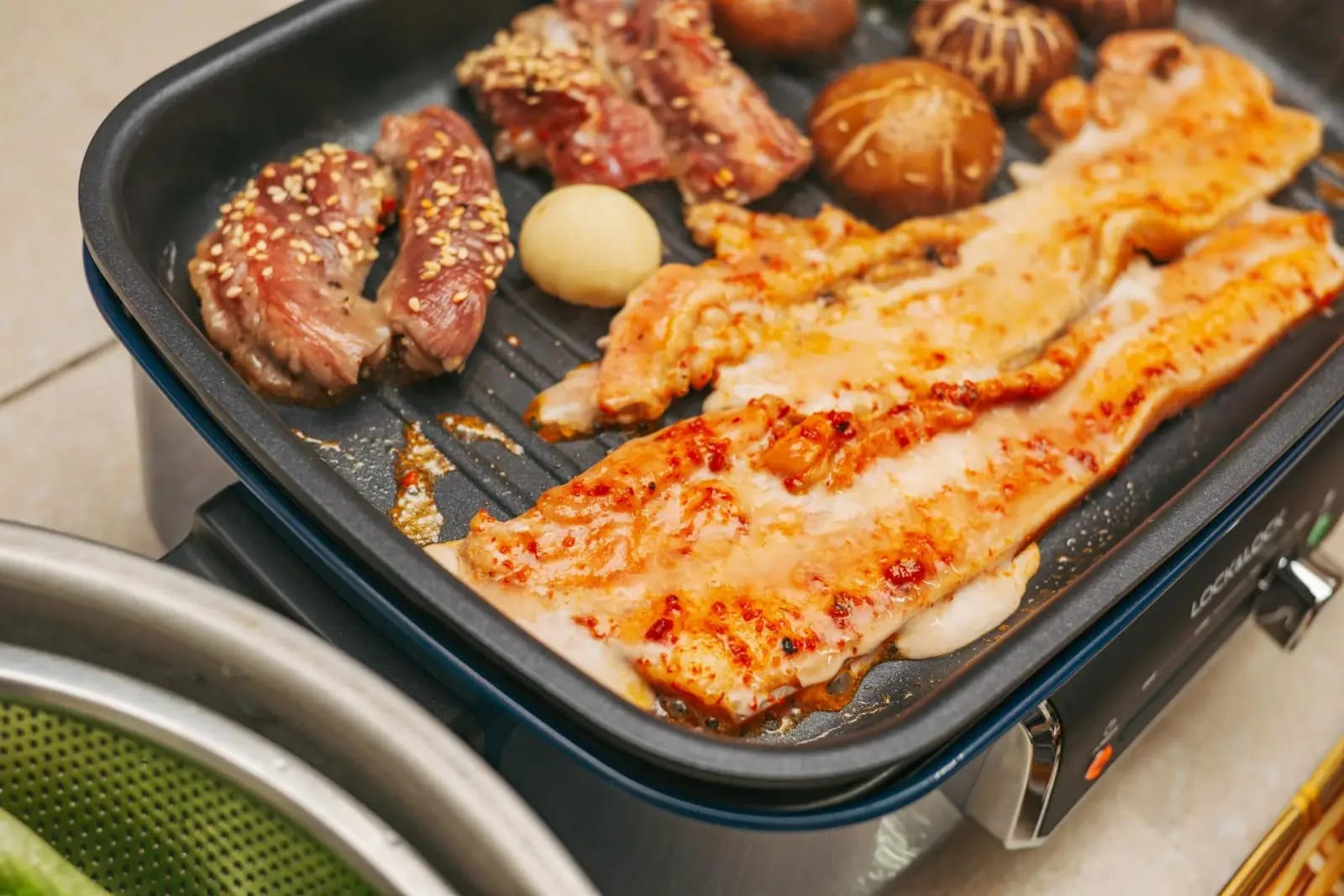
Korean BBQ isn't just a meal — it's an interactive dining event. You sit around a built-in grill, cook your own meat, and build wraps with lettuce, garlic, sauces, and banchan. The sizzling sounds, the smoky aroma, and the communal energy make it one of the most memorable food experiences in Korea.
Whether you're at a no-frills neighborhood joint or a premium hanwoo restaurant, this guide will help you navigate menus, grill like a pro, and finish the meal the Korean way.
Watch: Korean BBQ Explained
The Big Two: Samgyeopsal vs Hanwoo
Samgyeopsal (삼겹살) — Pork Belly
This is Korea's most popular BBQ meat, period. Thick-cut pork belly is grilled until the fat renders and the edges get crispy. It's affordable (₩12,000–18,000 per serving), available everywhere, and universally loved. Most Koreans eat samgyeopsal at least once a week.
Hanwoo (한우) — Korean Beef
Hanwoo is Korea's native cattle breed, and the top grades rival Japanese wagyu in marbling. The grading system runs from 3 (good) to 1++ (exceptional). A serving of 1++ hanwoo can cost ₩50,000–80,000, but the flavor is extraordinary — buttery, rich, and melt-in-your-mouth tender.
Naengdong Samgyeopsal (냉동삼겹살, aka 냉삼) — Frozen Pork Belly
You might see restaurants that specifically serve frozen samgyeopsal — sliced paper-thin and cooked from frozen on a hot grill. It cooks differently from fresh thick-cut: the thin slices crisp up fast and have a lighter, crunchier texture. Naengdong-samgyeopsal restaurants are typically cheaper (₩8,000–12,000 per serving) and popular with students and budget-conscious locals. Don't overlook it — the texture is addictive in its own way.
For a first-time visitor, start with samgyeopsal to get the full classic experience, then splurge on hanwoo if your budget allows.
Popular BBQ Cuts to Know
Samgyeopsal (삼겹살)
Pork belly. The king of Korean BBQ. Thick-cut, fatty, crispy edges.
Moksal (목살)
Pork neck/shoulder. Leaner than samgyeopsal but still juicy and flavorful.
Galbi (갈비)
Beef short ribs. Marinated in sweet soy sauce. Tender and slightly sweet.
Chadolbaegi (차돌박이)
Thinly sliced beef brisket. Cooks in seconds. Great for wraps.
Kkotsal (꽃살)
Pork jowl. Incredible marbling, often called 'pork wagyu' by locals.
Hanwoo Deungsim (한우등심)
Hanwoo sirloin. Premium cut with beautiful marbling. Worth the splurge.
Yangnyeom Galbi (양념갈비)
Pre-marinated beef ribs in sweet soy-pear sauce. Beginner-friendly.
Gabri (가브리살)
Pork skirt meat. A hidden gem — rich flavor, affordable price.
How to Grill Korean BBQ Like a Local
1
Wait for the grill to get hot
The staff will set up the grill (charcoal or gas) and bring your meat. Don't place meat until the grill is properly heated — you want a good sear, not a slow steam.
2
Place meat on the hottest part
Lay the meat flat on the center of the grill. For samgyeopsal, keep the pieces whole — don't cut them yet. Let one side get a nice golden crust before flipping.
3
Flip once, then cut with scissors
Flip the meat only once. When both sides are cooked, grab the kitchen scissors (provided at every table) and cut the meat into bite-sized pieces right on the grill. Yes, scissors — this is the Korean way.
4
Grill the garlic and kimchi
While the meat finishes, place raw garlic slices and kimchi on the grill edges. Grilled garlic becomes sweet and mild. Grilled kimchi gets smoky and slightly caramelized — an incredible pairing.
5
Build your ssam wrap
Take a lettuce or perilla leaf, add a piece of meat, a dab of ssamjang (spicy-savory paste), grilled garlic, and any banchan you like. Fold it up and eat in one bite. That's the perfect ssam.
6
Don't rush — cook in batches
Order more meat as you go rather than crowding the grill. Koreans take their time — BBQ is a social event. Sip soju or beer between rounds. Enjoy the pace.
Scissors at the Table: Totally Normal
First-time visitors are often surprised to see large kitchen scissors at a BBQ restaurant. In Korea, scissors are the standard tool for cutting meat at the table — far more practical than a knife and fork on a hot grill.
The staff may come over and cut the meat for you (especially at higher-end places), but at self-service spots, just grab the scissors and cut away. They're specifically designed for food use — sturdy, easy to grip, and perfectly hygienic. You'll also see scissors used for cutting naengmyeon noodles, kimchi, and more across Korean restaurants.
Don't be shy about it. Once you try it, you'll wonder why every country doesn't do this.
BBQ Table Etiquette
Do
- Let the most experienced person manage the grill (or the staff if they offer)
- Use the tongs to handle raw meat, not your chopsticks
- Wrap your soju glass with both hands when someone older pours for you
- Say 'jal meokgesseumnida' (잘 먹겠습니다) before eating — it means 'I'll eat well'
- Try everything on the table — banchan are typically free and refillable at most restaurants
Don't
- Don't flip the meat constantly — once is enough
- Don't let meat burn while chatting — someone should always watch the grill
- Don't pour your own soju — pour for others and they'll pour for you
- Don't stack raw meat on cooked meat
- Don't leave the grill empty — order the next round before finishing
The Post-BBQ Meal: Naengmyeon or Doenjang-jjigae
In Korea, the meal doesn't end with the last piece of meat. A proper Korean BBQ session typically has a closing act.
Naengmyeon (냉면) — Cold Buckwheat Noodles
The most traditional post-BBQ choice. Ice-cold noodles in a tangy, refreshing broth that cuts through all the rich, fatty flavors you've been eating. You can choose mul-naengmyeon (in broth) or bibim-naengmyeon (spicy). Many BBQ restaurants have naengmyeon on the menu specifically for this purpose. Use the scissors on the table to cut the long noodles into manageable lengths before eating.
Doenjang-jjigae with Rice (된장찌개 + 공기밥)
A bubbling pot of fermented soybean paste stew with tofu, zucchini, and peppers, served with a bowl of white rice. It's hearty, savory, and the perfect warm finish. Many Koreans swear this is the only proper way to end a BBQ.
Dwaeji-gukbap (돼지국밥)
At some pork BBQ joints (especially in Busan-style restaurants), you can finish with a bowl of pork bone soup with rice. Light yet satisfying.
Most BBQ restaurants offer at least naengmyeon or doenjang-jjigae. Don't skip it — the closing dish is part of the experience.
Typical BBQ Price Range (per serving, 1 person)
| Samgyeopsal (pork belly) | ₩12,000 – ₩18,000 |
| Moksal (pork neck) | ₩13,000 – ₩18,000 |
| Chadolbaegi (beef brisket) | ₩15,000 – ₩22,000 |
| Galbi (marinated beef ribs) | ₩18,000 – ₩30,000 |
| Hanwoo sirloin (1++ grade) | ₩50,000 – ₩80,000 |
| Naengmyeon (post-BBQ noodles) | ₩8,000 – ₩12,000 |
| Doenjang-jjigae + rice | ₩3,000 – ₩5,000 |
| Soju (bottle) | ₩5,000 – ₩6,000 |
Prices as of Mar 2026. May vary by location.
Solo BBQ? No Problem
Traditional BBQ is for groups of 2+, and many old-school restaurants have a 2-serving minimum. But Korea's 'honbap' (solo dining) culture has spawned a wave of solo BBQ spots — especially in Seoul. Look for '1인 삼겹살' (1-person samgyeopsal) restaurants, which have individual grills and single-serving portions. Chains like 혼밥식당 and 고기한판 cater specifically to solo diners.
Staff Grilling Service
At many restaurants (especially higher-end hanwoo places), the staff will grill the meat for you. Don't feel pressured to do it yourself if you're not comfortable. At casual samgyeopsal spots, it's usually self-service — but if you look lost, staff often step in to help. Either way, you can't really mess it up.
Plan Your Visit
Seoul monthly averages to help you pack right
Jan-1°-8°18mm
Feb2°-6°25mm
Mar9°0°40mm
Apr17°6°65mm
May23°12°90mm
Jun27°18°130mm
Jul29°22°370mm
Aug30°22°290mm
Sep26°16°140mm
Oct19°8°45mm
Nov10°1°50mm
Dec2°-5°20mm
More Guides
25 Must-Eat Korean Foods: The Essential Checklist
The dishes every visitor to Korea should try at least once. Not trendy picks — the real staples that Koreans eat every week.
Korean Dining Essentials: Chopsticks, Scissors, and Table Manners
A practical guide to eating in Korean restaurants — chopstick tips, the scissors-at-the-table culture, how to ask for a fork, and essential dining etiquette for visitors.
Somaek, Chimaek & Korean Drinking Culture Explained
Soju bombs, fried chicken with beer, and the unwritten rules of Korean drinking. A practical guide to Korea's drinking culture — what to order, where to go, and how not to embarrass yourself.
Seoul Street Food: Where & What to Eat
From sizzling tteokbokki to crispy hotteok, here's your map to Seoul's best street food spots. Grouped by neighborhood so you can eat your way through the city.