All Guides
Korean Dining Essentials: Chopsticks, Scissors, and Table Manners
A practical guide to eating in Korean restaurants — chopstick tips, the scissors-at-the-table culture, how to ask for a fork, and essential dining etiquette for visitors.
Korean chopsticksKorean dining etiquetteKorean restaurant scissorshow to eat in Korean restaurantKorean table manners
Dining in Korea: Different Tools, Same Goal
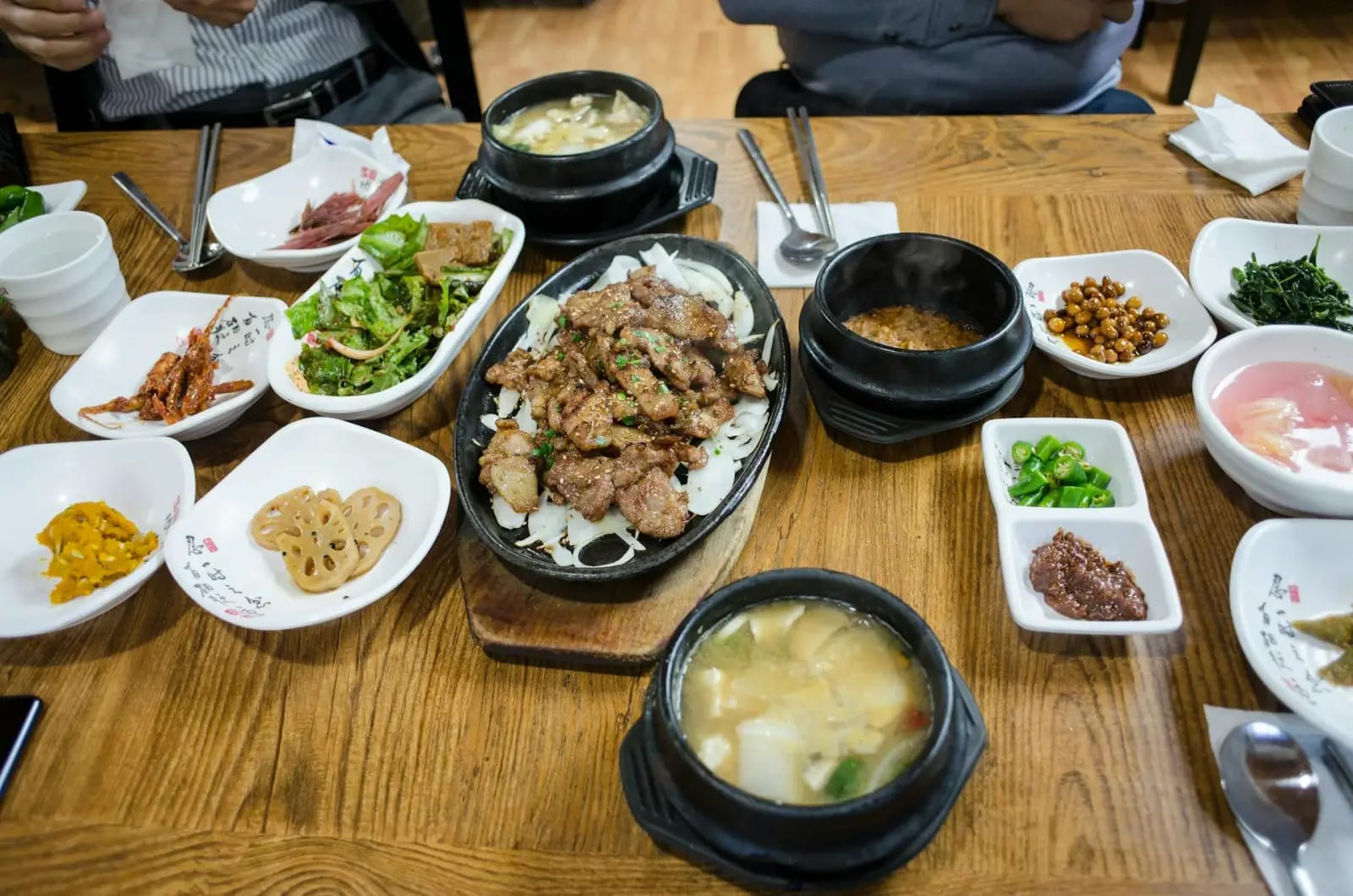
Korean restaurants will hand you a pair of metal chopsticks, a long-handled spoon, and — at many places — a pair of kitchen scissors. No knife, no fork (unless you ask). For many visitors, this is the first culture shock before the food even arrives.
Don't panic. This guide covers the three essential tools of Korean dining, basic table manners, and practical tips so you can eat comfortably from day one.
Korean Chopsticks: Why They're Different
Korean chopsticks are flat and made of stainless steel — unlike the wooden or bamboo chopsticks you'll find in Japan or China. They're thinner, heavier, and notoriously slippery for beginners.
Why metal? Korea has a long tradition of using metal utensils, dating back to the royal court. Metal is durable, hygienic, easy to sanitize, and doesn't absorb flavors. Restaurants can wash and reuse them thousands of times.
Why flat? Flat chopsticks are actually better for picking up banchan (side dishes) — thin slices of kimchi, seasoned spinach, tiny anchovies. The flat surface grips better than round chopsticks for these small items.
That said, they do have a steeper learning curve. If you've only used wooden chopsticks before, expect a brief adjustment period.
Quick Chopstick Guide for Beginners
1
Hold the bottom chopstick steady
Rest the bottom chopstick in the crook between your thumb and index finger, supported by your ring finger. This chopstick stays still — it's the anchor.
2
Move only the top chopstick
Hold the top chopstick like a pen between your index and middle fingers. Move it up and down to meet the bottom one. Only the top chopstick moves.
3
Start with bigger items
Practice with larger pieces of food first — chunks of tofu, pieces of meat, thick kimchi. Don't start with rice (that's what the spoon is for in Korean dining).
4
Use the spoon for rice and soup
Unlike in Japan, Koreans eat rice with a spoon, not chopsticks. The spoon is also for soups and stews. Alternate between chopsticks (for banchan and meat) and spoon (for rice and liquid).
5
Don't stress — ask for a fork
If chopsticks are frustrating, just say 'po-keu ju-se-yo' (포크 주세요) — 'fork please.' Most restaurants have forks available. Nobody will judge you. Enjoying your meal matters more than struggling with utensils.
Seriously, Don't Stress About Chopsticks
Many visitors feel embarrassed about struggling with chopsticks. Don't. Koreans genuinely appreciate that you're trying, and they completely understand it's a skill that takes practice. Staff at tourist-area restaurants often bring forks automatically for foreign guests. If you want to practice, convenience stores and street food stalls are low-pressure environments to build your confidence. The goal is to enjoy the food — not to perform.
The Scissors Culture: Korea's Secret Kitchen Tool
Walk into almost any Korean restaurant and you'll spot a pair of large kitchen scissors on the table — right next to the chopsticks and napkins. This surprises visitors, but in Korea, scissors are as essential as a knife is in Western dining.
Scissors are everywhere because they work better. Think about it: cutting sizzling meat on a round grill with a knife and fork? Awkward. Cutting it with scissors? Two snips and done. Cutting long, slippery naengmyeon noodles in a bowl of broth? A knife is useless. Scissors handle it in one cut.
Korean food scissors are purpose-built for the table. They're made from food-grade stainless steel, designed with ergonomic handles for one-handed use, and manufactured to hygiene standards. They're not random office scissors — they're a dedicated kitchen tool that happens to live on the dining table.
What Koreans Cut with Scissors
BBQ Meat
Samgyeopsal, galbi, and other grilled meats are cut into bite-sized pieces right on the grill. The most common scissors use.
Naengmyeon Noodles
Cold buckwheat noodles are notoriously long. A few scissor cuts makes them much easier to eat with chopsticks.
Kimchi
Large kimchi leaves served as banchan are often cut at the table for easier handling — especially the thick stem parts.
Jjim Dishes
Braised dishes like galbi-jjim or jjimdak — scissors cut through tender meat and vegetables in the pot.
Gimbap & Rolls
Some street vendors and casual spots cut gimbap rolls with scissors for faster service.
Lettuce Wraps
Oversized lettuce or perilla leaves can be trimmed to the right size for your ssam wrap.
Try It — You'll Convert
Scissors might feel strange at first, but after a few meals you'll understand why Koreans prefer them. They're faster, more precise, and easier to use at the table than a knife. Many expats and frequent visitors end up buying Korean kitchen scissors to use at home. It's one of those 'why doesn't everyone do this?' moments.
Korean Table Manners
Do
- Say 'jal meokgesseumnida' (잘 먹겠습니다) before eating — it shows gratitude for the meal
- Use your spoon for rice and soup, chopsticks for side dishes and meat
- Wait for the eldest person at the table to start eating first
- If you ordered meat, don't use the meat-cutting scissors for naengmyeon — the restaurant will bring a separate pair for noodles
- Accept drinks or dishes offered by elders with both hands
- Ask for a fork if you need one — 'po-keu ju-se-yo' (포크 주세요)
Don't
- Don't stick chopsticks upright in rice — it resembles a funeral ritual and is considered very bad manners
- Don't lift your rice bowl off the table to eat (unlike in Japan, bowls stay on the table in Korea)
- Don't blow your nose at the table — excuse yourself to the restroom
- Don't point at people with chopsticks
- Don't reach across the table — ask someone to pass dishes instead
Essential Korean Phrases for Restaurants
Yeo-gi-yo! (여기요!)
Excuse me! — to call the server. Completely normal, not rude.
I-geo ju-se-yo (이거 주세요)
This one, please — point at the menu while saying it.
Mek-ju han jan ju-se-yo (맥주 한 잔 주세요)
One beer, please.
Ban-chan deo ju-se-yo (반찬 더 주세요)
More side dishes, please. Banchan refills are typically free.
Mul ju-se-yo (물 주세요)
Water, please. Water is always free.
Po-keu ju-se-yo (포크 주세요)
Fork, please — no shame in asking.
Deol maep-ge (덜 맵게)
Less spicy, please — useful for jjigae and tteokbokki.
Gye-san-seo ju-se-yo (계산서 주세요)
Check, please. Pay at the counter near the exit, not at the table. Tipping is not expected.
The Hidden Utensil Drawer
Look at the side of your table — reach under or beside it. Many Korean restaurants have a built-in drawer or compartment on the side of the table that holds chopsticks, spoons, napkins, and wet wipes. If you can't find utensils on the table, feel around the edges. Once you know to look for it, you'll notice it everywhere.
The Call Button
Most Korean restaurants have a call button (벨) on each table — a small buzzer you press to summon the server. Use it instead of waving or shouting. If there's no button, calling out 'yeo-gi-yo!' is the standard way to get attention. It's not considered rude at all — it's expected.
Plan Your Visit
Seoul monthly averages to help you pack right
Jan-1°-8°18mm
Feb2°-6°25mm
Mar9°0°40mm
Apr17°6°65mm
May23°12°90mm
Jun27°18°130mm
Jul29°22°370mm
Aug30°22°290mm
Sep26°16°140mm
Oct19°8°45mm
Nov10°1°50mm
Dec2°-5°20mm
More Guides
Korean BBQ: The Complete Guide to Grilling Like a Local
Everything you need to know about Korean BBQ — from samgyeopsal and hanwoo beef to table-side grilling, scissors etiquette, and the perfect post-BBQ meal.
25 Must-Eat Korean Foods: The Essential Checklist
The dishes every visitor to Korea should try at least once. Not trendy picks — the real staples that Koreans eat every week.
Korean Greetings & Etiquette: What You Actually Need to Know
Skip the outdated travel blog advice. Here's how Koreans actually greet each other, why you don't need to press your palms together, and the etiquette that actually matters.
Seoul Street Food: Where & What to Eat
From sizzling tteokbokki to crispy hotteok, here's your map to Seoul's best street food spots. Grouped by neighborhood so you can eat your way through the city.